

Director of Sustainability Marketing
5 min read

You might have heard the terms climate mitigation and climate adaptation before and wondered what they mean, and what role they play in achieving net-zero? We speak to businesses every day that ask us these kinds of questions, so we’re here to break it down in this article.
As part of this guide we’ll cover:
What are the definitions of climate mitigation and climate adaptation?
What are the climate strategies associated with them?
What’s the purpose of each approach?
What kind of costs are associated with each approach?
What’s their role in achieving net-zero?
What types of projects do they involve?
Definition of climate mitigation and climate adaptation
Climate mitigation
Involves actions taken to reduce or prevent the emission of greenhouse gases into the atmosphere, with the goal being to limit the extent and impact of climate change.
Climate adaptation
Refers to measures taken to adapt to the impacts of climate change that are already occurring or are projected to occur. Adaptation focuses on minimising the negative effects of climate change, and building resilience to climate-related risks.
Companies looking to future-proof their organisation should be mitigating and adapting to climate change.
Climate mitigation vs climate adaptation: at a glance
Climate Mitigation | Climate Adaptation | |
|---|---|---|
Definition | Reducing or preventing GHG emissions | Adjusting to actual or projected climate impacts |
Primary goal | Limit the causes of climate change | Manage the consequences of climate change |
Timeframe | Long-term (decades) | Near- to medium-term |
Examples | Renewable energy, reforestation, carbon removal | Flood defences, drought-resilient crops, early warning systems |
Cost profile | High upfront; significant long-term savings | Variable; rises with every degree of warming |
Net-zero role | Central | Complementary |
What are the types of climate mitigation and climate adaptation strategies?
Climate mitigation
Strategies include transitioning to renewable energy sources, improving energy efficiency, implementing carbon dioxide removal technologies, and promoting afforestation and reforestation efforts to restore natural carbon sinks.
Climate adaptation
Strategies include developing climate-resilient infrastructure, implementing water conservation practices, establishing early warning systems for extreme weather events, shifting to more resilient agricultural practices, and protecting and restoring natural ecosystems.
What is the key purpose of climate mitigation and climate adaptation?
Climate mitigation
The primary objective is to reduce the concentration of greenhouse gases in the atmosphere, thereby slowing or halting the rate of warming and its associated impacts, such as rising sea levels, extreme weather events, and breakdown ecosystems.
Climate adaptation
The main objective is to reduce the vulnerability of human and natural systems to the impacts of climate change, enhance their capacity to cope with climate-related risks, and promote long-term resilience in the face of changing climatic conditions.
Climate mitigation and climate adaptation costs
Climate mitigation
Measures often involve up-front costs, but this can lead to long-term cost savings. Over time, the adoption of new technologies costs less and results in greater benefits, such as we have seen with renewable energy technologies.
Climate adaptation
Measures also incur costs, but these are typically focused on adapting infrastructure to withstand changing environmental conditions. Adaptation costs may vary depending on the scale of the project and the vulnerability of the affected regions.
As you can see, there are some differences but ultimately both involve some investment and both will produce massive cost savings in the long run.
What are the types of climate mitigation and climate adaptation projects?
Climate mitigation
Projects which reduce greenhouse gas emissions or enhance sequestration. These can include renewable energy projects, energy efficiency improvements, conservation, afforestation and reforestation initiatives, adoption of low-carbon transportation systems, and carbon dioxide removal technologies
Climate adaptation
Projects which focus on building resilience to the impacts of climate change. This may involve constructing climate-resilient infrastructure, implementing water conservation strategies, developing early warning systems for extreme weather events, restoring ecosystems, and transforming agricultural practices.
What is the role of climate mitigation and adaptation in achieving net-zero?
Climate mitigation
Interventions are crucial to achieving net-zero by significantly and permanently reducing the amount of greenhouse gases in the atmosphere. Mitigation efforts aim to reduce emissions and balance residual sources of emissions with sinks, ultimately leading to net-zero emissions.
Climate adaption
Is essential for building resilience to climate impacts, but does not necessarily contribute to achieving net-zero emissions. Instead, adaptation measures focus on minimising the negative effects of climate change on communities and ecosystems, enhancing their ability to cope with climate-related risks.
Despite the fact that they are different approaches, many solutions (e.g. mangrove restoration) are exceptional contributors to both mitigation and adaptation.
Building an integrated climate strategy for your business
Understanding the difference between mitigation and adaptation is the first step. The second is knowing how to take action. At Ecologi, we use the 3Rs Framework to help businesses navigate this journey with confidence. The 3Rs offers a simplified, pragmatised and integrated model that is grounded in the Greenhouse Gas Protocol, the Science Based Targets initiative (SBTi), and informed by Oxford Net Zero.
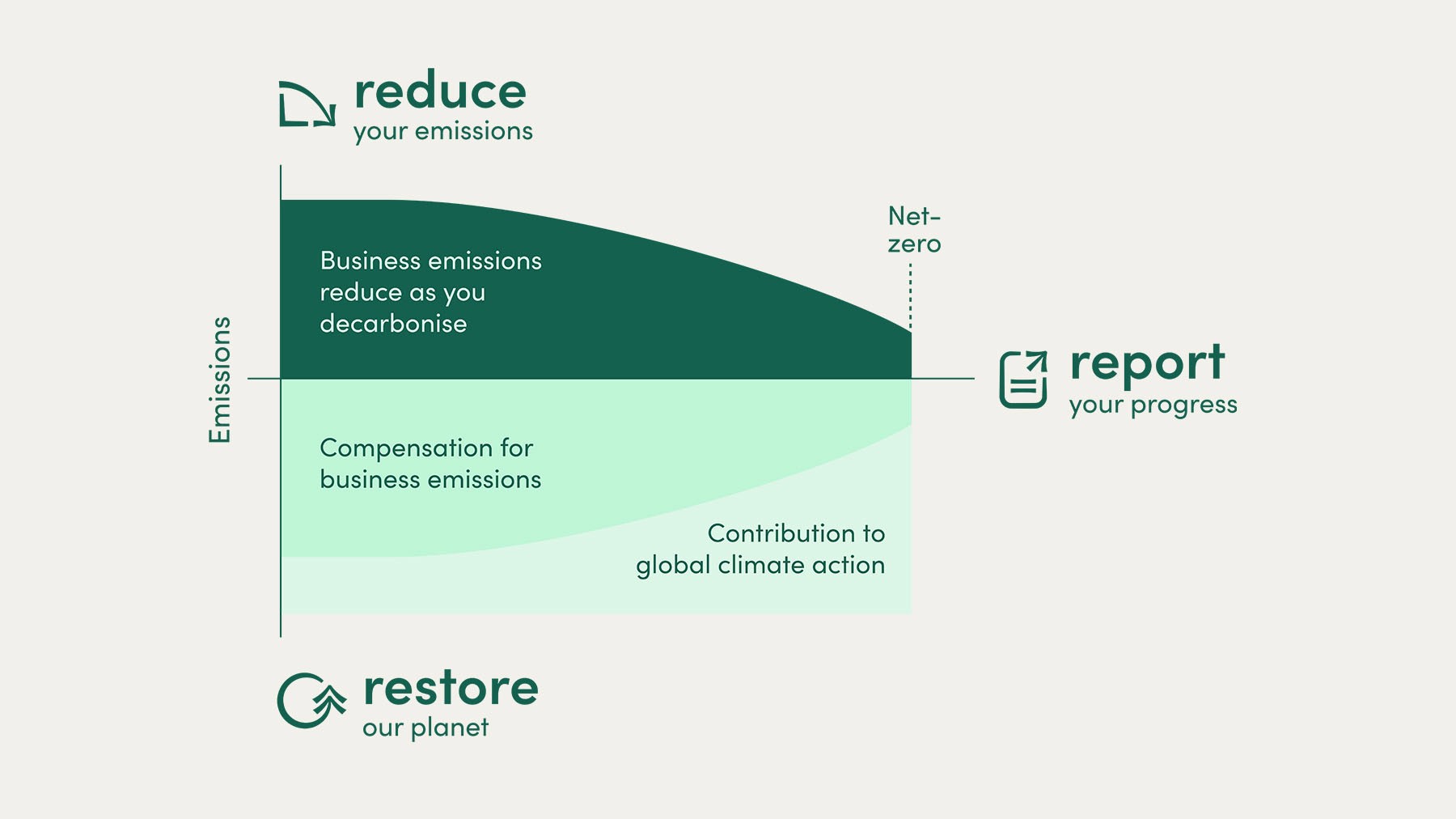
It translates complexity into clarity and embedding progress into the design, so your businesses can be empowered on your climate journey to act confidently with clear guidance to:
Invest responsibly in both reducing emissions and restoring our planet by funding high quality climate projects.
Report progress transparently in alignment with global guidelines and be recognised for doing so.
Realise the business and commercial benefits that a climate strategy and plan can deliver.
Learn how to progress your climate strategy in our free on demand webinar, available here.
The bottom line: Why we need both mitigation and adaptation
Climate mitigation is concerned with reducing the amount of greenhouse gases in the atmosphere, and limiting further climate change. Whereas climate adaptation is mostly concerned with building resilience and adapting to the impacts of climate change. There are many solutions, such as mangrove restoration that are exceptional contributors to both mitigation and adaptation. Both approaches are critical for addressing the challenges of climate change and transitioning towards a sustainable and resilient future.
Is your business ready to take climate action?
We’ve supported over 16,000 businesses on their climate journey helping them to navigate the complexities of a climate strategy with a focus on long-term impact and return on investment. If you're ready to embed the 3Rs Framework into your operations, schedule a call with our team to explore how we can support your business wherever you are on your climate journey.